
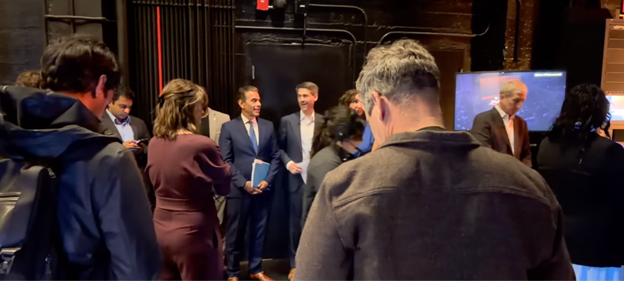
How We Took The Ezra Klein Show Live: A Five-Candidate Governor Forum for The New York Times
Insights
Client: The New York Times
Production: The Ezra Klein Show, live taping and multi-platform distribution
Venue: Calvin Simmons Theatre, Oakland
The room: Sold out. The reach: national.
Short Summary
When The New York Times took The Ezra Klein Show live for the first time, the stakes could not have been higher. Argus HD delivered a flawless multi-platform broadcast with a senior-led crew, broadcast-grade gear, redundant streaming systems, and calm execution under pressure. From livestream to podcast delivery, the show went out clean without a single hiccup.
The Stakes
A live forum with five candidates for Governor of California. One stage. One take. And the first time in its history, The New York Times’ flagship podcast, The Ezra Klein Show, was distributed live.
Not a recording. Not a tape delay. Live. To a sold-out theatre, to YouTube, to a national livestream, and across social, all at once. The New York Times pushed it as an app alert. The front page of NYT.com linked straight to the YouTube feed. The country clicked in.
There was no rehearsal. There was no second take. There was no margin.
This is the moment a client finds out who they hired for their flagship.
Why We Got The Call
When the country’s most important newsroom takes its flagship podcast live for the first time, the conversation is not about price, and it is not about geography. It is about who can deliver broadcast-grade live distribution at the standard a flagship demands. The New York Times wanted the best team for the job. They called Argus HD.
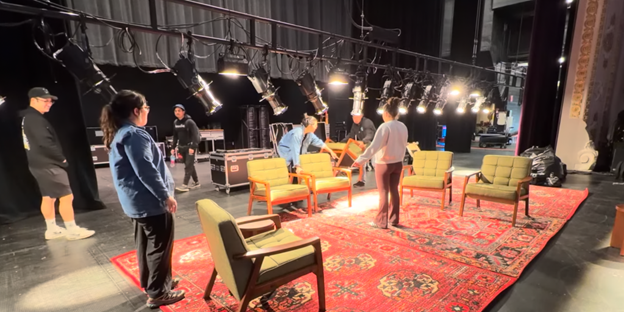
A senior-led crew of under twenty. A full broadcast control room dropped into a concert hall that was never built to be one. A technical package sized exactly to the show, not a frame more and not a frame less. The kind of production where the host walks on stage and forgets we are there.
The Build
Seven cameras. Every one of them earns its keep.
Three Sony FR7 robotic cinema PTZs for clean, repeatable, full-frame coverage across five candidates and a host. The FR7 is the broadcast-grade robotic system that the top shows in the country are running, and on a flagship podcast, it is the right answer. A hero UHD package on a Fuji 46x, the newest broadcast lens on the market, the kind of glass that would feel at home filming the Super Bowl. We put it on this show because a flagship podcast at this scale deserves the same lens as the biggest sports broadcasts in the country. The long lens look is what makes a podcast feel like television, and we brought it. A wireless handheld for the moments that move. A lock-off safety angle, because a flagship does not get a do-over. And a slider for cinematic motion that makes the final cut feel like a film, not a tape.
Audio, split intentionally. A Yamaha DM7C dedicated to the house mix, tuning the room for over a thousand people in a working concert hall. A separate Yamaha QL5 dedicated to the livestream mix, with clean stems for podcast post. Two consoles, two engineers, two distinct audiences. Because the mix that fills a theatre is not the mix that wins a podcast, and the team that knows the difference is the team that delivers both at the same time.
Every principal dual-mic’d, on purpose. Every candidate and the host wore a lav and worked a handheld. Two paths to broadcast for every voice on stage. If one mic ever picked up a thump, a rustle, or a wireless dropout, the other was already live and ready. The podcast mix gets the cleanest of the two, every time. This is what the top live podcasts in the country do, and it is what we do by default on a flagship. Nobody in the audience knows it is happening. The mix engineers know.
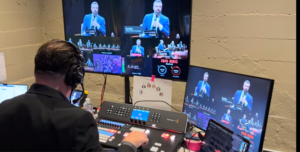
Video, graphics, encoding. A full broadcast switcher, on-screen graphics, and a streaming stack feeding podcast capture, YouTube live, the New York Times livestream, and social cutdowns simultaneously. One show. Four destinations. One execution.
Redundancy, because every great vendor builds for the moment they hope never comes. Our primary streaming path was backed up by a TVU cellular bonded transmission unit running in parallel, ready to take over instantly if the venue’s network ever wavered. It never did. The TVU sat all night quietly. That is exactly what a backup is supposed to do. Clients who have been burned before know to ask. Clients who haven’t been burned yet learn quickly why we bring it on a flagship show.
What Happened
The show went out clean. The podcast dropped on schedule and sounded great. The livestream is held. The YouTube feed, the one the front page of The New York Times pointed at, ran without a hiccup. The push alert hit. The audience clicked. The feed was delivered.
The client team told us afterward that they were thrilled. The YouTube partners on site for this format saw a show that looked and sounded the way they want their flagship live distributions to look and sound. Nobody in the audience noticed the production. The host walked off stage having had a conversation, not a battle with the room.
That is the job.
What Experience Buys You
Here is what really happens on a flagship show. The plan changes. Something gets added at the last minute. A request comes in close to doors that a less experienced team would have to say no to, because their package is already at the edge of what they can run.
That happened on this show. More than once. And every time, the answer was yes.
A speaker timer was added late so the host could keep five candidates inside their windows. Yes, we built it, deployed it, and put it where it needed to be. A mic needed to be swapped during the show. Yes, our audio team executed the swap without a glitch in the program or the livestream, because every principal was dual-mic’d from the start. The cleanest mic stayed live. The audience did not notice. Neither did the millions of people on the YouTube feed.
Yes, because the package was built with headroom. Yes, because the crew in every position had seen the request before on another show, in another room, with another high-stakes client. Yes, because senior people know how to absorb a change without breaking the rest of the plan.
This is what experience buys you. Not just clean execution on the show that was planned. Calm, confident execution on the show that actually happens, including every adjustment the client asks for in the last hour. A green crew gets you a flat no. A veteran crew gets you a quiet yes, and a flagship that goes out looking like nothing changed.
That is the difference between a vendor and a partner. That is what The New York Times paid for, and that is what they got.
The Argus HD Difference
Live podcasting is the fastest-growing format in media, and the ceiling is moving up every week. Audiences expect broadcast. Hosts expect calm. Distribution partners expect feeds that simply work. The teams that win this category are the ones who can deliver all three on the same night, with senior people in every position, broadcast-grade gear in every position, and a crew small enough to move like one.
When The New York Times needed a partner to take its flagship podcast live for the first time, it called Argus HD.
Flagship work is the work we want. Flagship work is the work we are built for.
Bottom Line
Flagship productions demand more than equipment. They demand experience, adaptability, and execution without compromise. Argus HD proved it can deliver all three when it mattered most.
This production now anchors our New York operation, where our New York productions include live events, hybrid conferences, and investor broadcasts.