How to Plan an Event Video in San Francisco (Venues + Permits + Tips)
Quick Summary
An event video in San Francisco means selecting the right venue, getting permits, and training to meet the challenges unique to the city. A great team, clear objectives, and clever planning can get you professional, engaging footage.
Introduction
It is an exciting and, at the same time, overwhelming experience to plan an event video in San Francisco. San Francisco’s iconic spots, crowds, and filming regulations can overwhelm any creator.
Lots of teams have problems with the venue, permits, or bad weather conditions. Still, you will be able to get a gorgeous shot without any pressure with the proper plan.
This blog is about venues, permits, and teams, tips, and all you need to make the video of the event in San Francisco go smoothly.
-
Define Your Event Video Goals
With clear goals, you can plan quicker and shoot smarter. The last thing to know is the purpose, tone, and style of your video.
- Choose whether it is marketing, internal communication, or social media.
- Select your target audience.
- Final video length and the key message.
- Explain how you would like viewers to feel.
-
Choosing the Right Venue for Filming
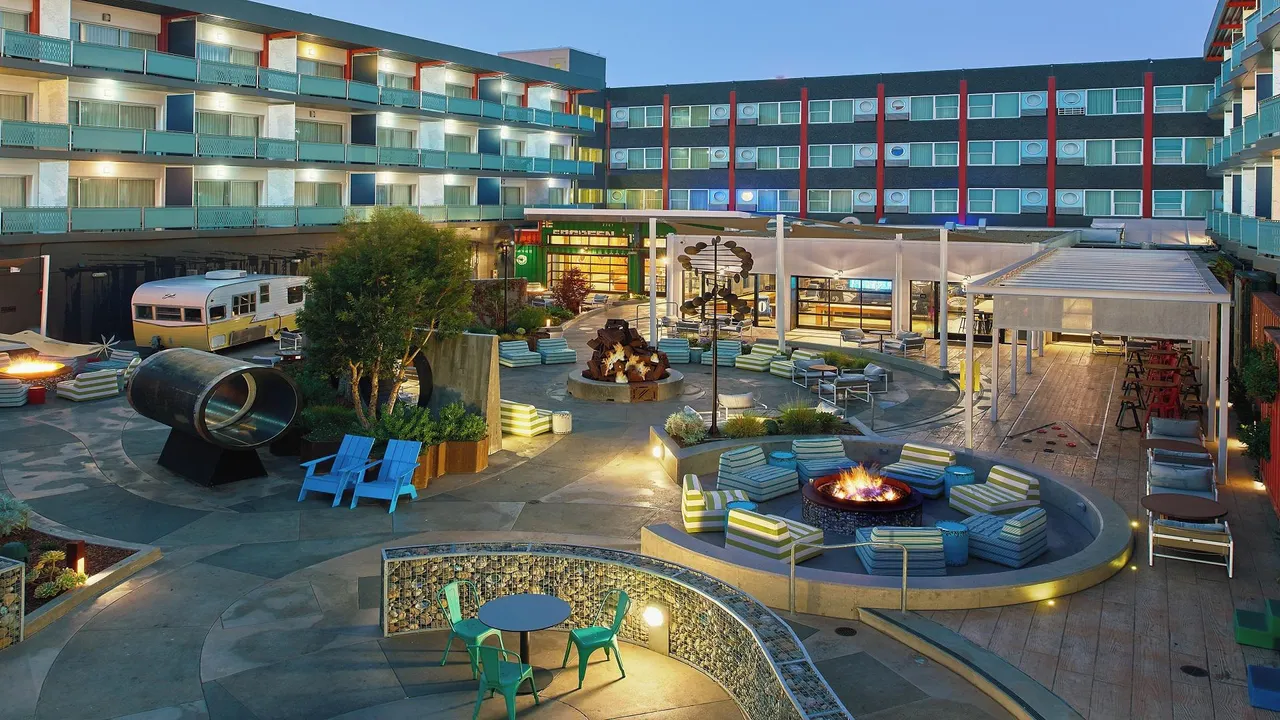
San Francisco offers stunning filming locations. Choosing the right venue depends on your theme, crowd size, equipment, and permit needs.
Indoor Venues
San Francisco indoor venues provide controlled settings and constant lighting. They are ballrooms, convention centres, studios, and coworking spaces.
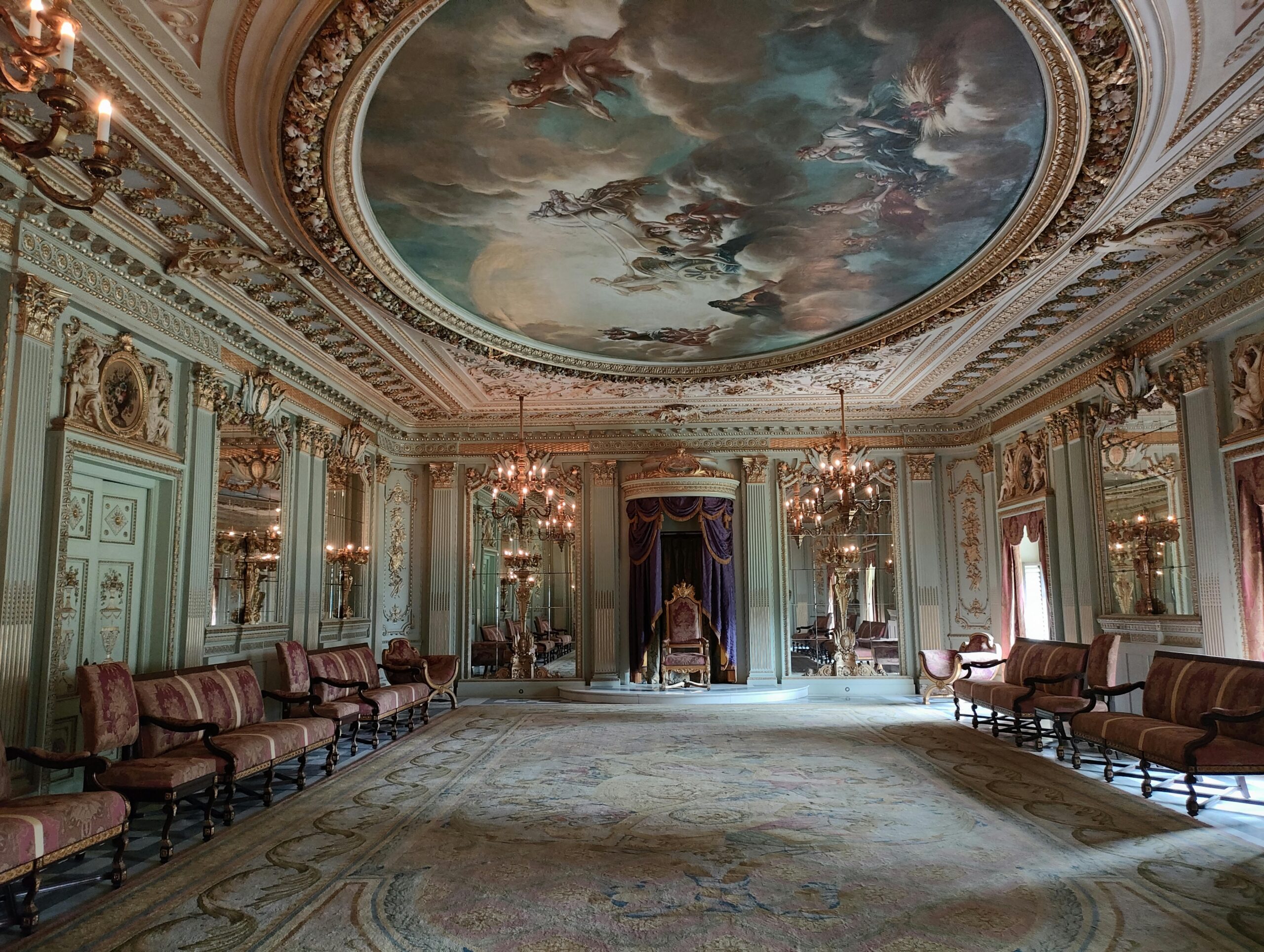
These venues do not have any problems with the weather. They offer power, toilets, a sound system, clean sound, and simple control of guests.
Outdoor Venues
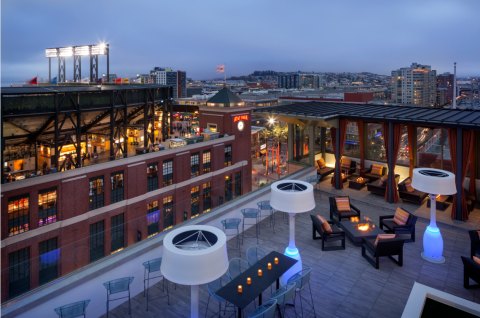
Outdoor venues give beautiful views of the Golden Gate Bridge, parks, and rooftops. They add natural charm but require planning for weather, crowds, and permits. They are suited to dynamic and scenic event videos.
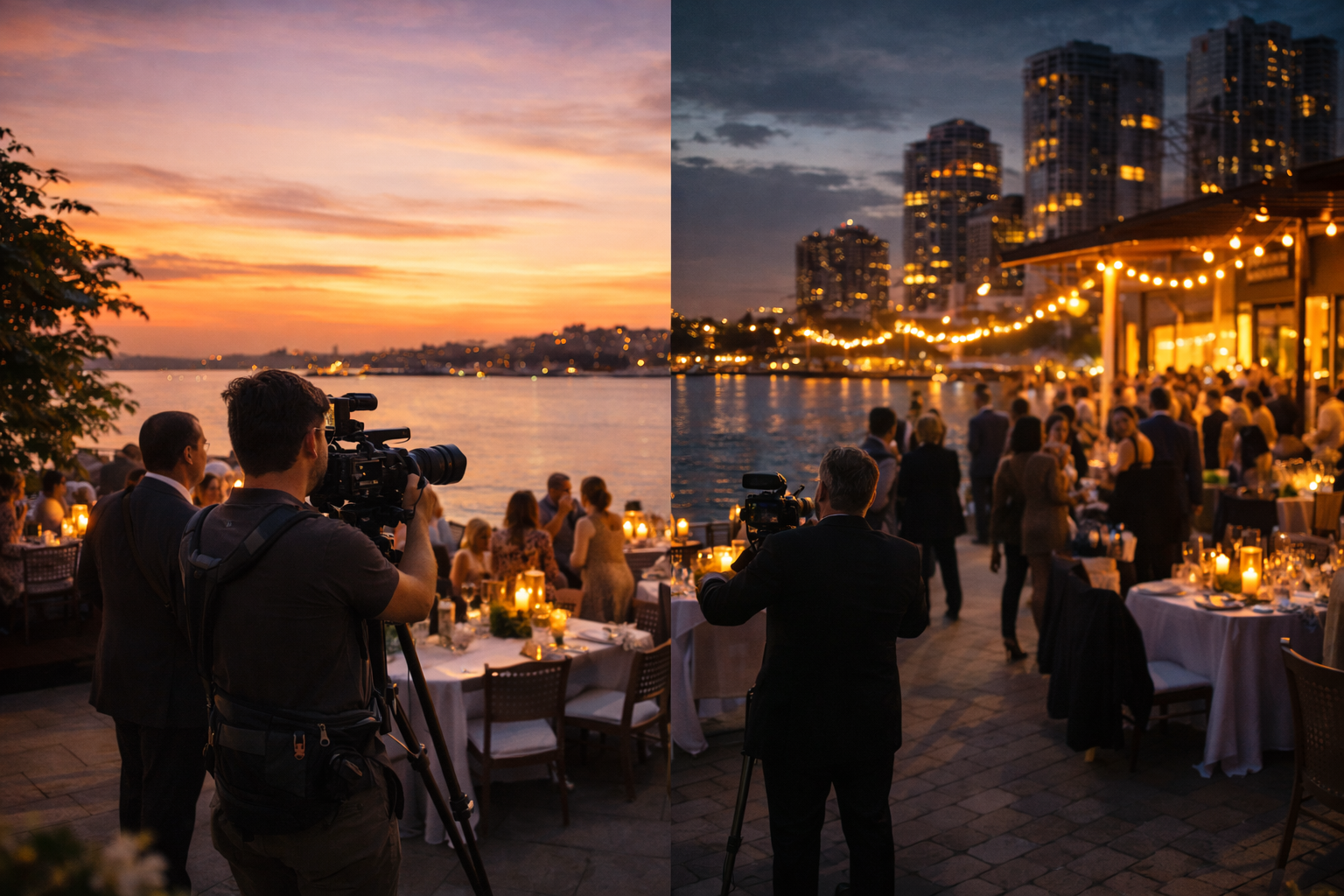
Venue Scouting Tips
Begin with a brief tour to learn about the filming conditions.
- Lighting checks at various times.
- Test audio for noise.
- Ask about power access.
- Confirm parking or loading areas.
- Check Wi-Fi for streaming.
- Verify drone or equipment restrictions.
-
Understanding San Francisco Filming Permits
Filming regulations in San Francisco are very strict, particularly in outdoor and open areas. Knowing the permit regulations can save time, money, and last-minute problems.
Why Permits are Important?
Permits guarantee legal and safe filming. They assist in liaising with city departments, traffic control, and security. They also provide credibility to your crew and stop traffic jams.
When Do You Need a Permit?
Most commercial shoots on public property require a permit. This involves sidewalks, parks, roads, and landmarks. Tripods, lights, generators, drones, or blocking paths also need approval.
Where to Get a Permit?
The San Francisco Film Commission issues most permits. Certain locations, such as National Parks, the Presidio, and the Golden Gate Bridge, require individual permits. Never forget to verify location ownership to avoid delays.
Processing Time & Fees
The processing of permits requires several business days. Complex systems or drone operations can be time-consuming. Costs depend on location, type of event, crew size, and length. Liability insurance is generally needed.
Tips for Smooth Approval
Start the application early.
- Provide complete details.
- Make insurance papers.
- Have backup dates and places.
- Make contact with venues and officials.
- Avoid last-minute changes.
-
Building Your Event Video Team
With a good team, your event video will run without problems. San Francisco is full of talented artists, yet it is important to select the right combination.
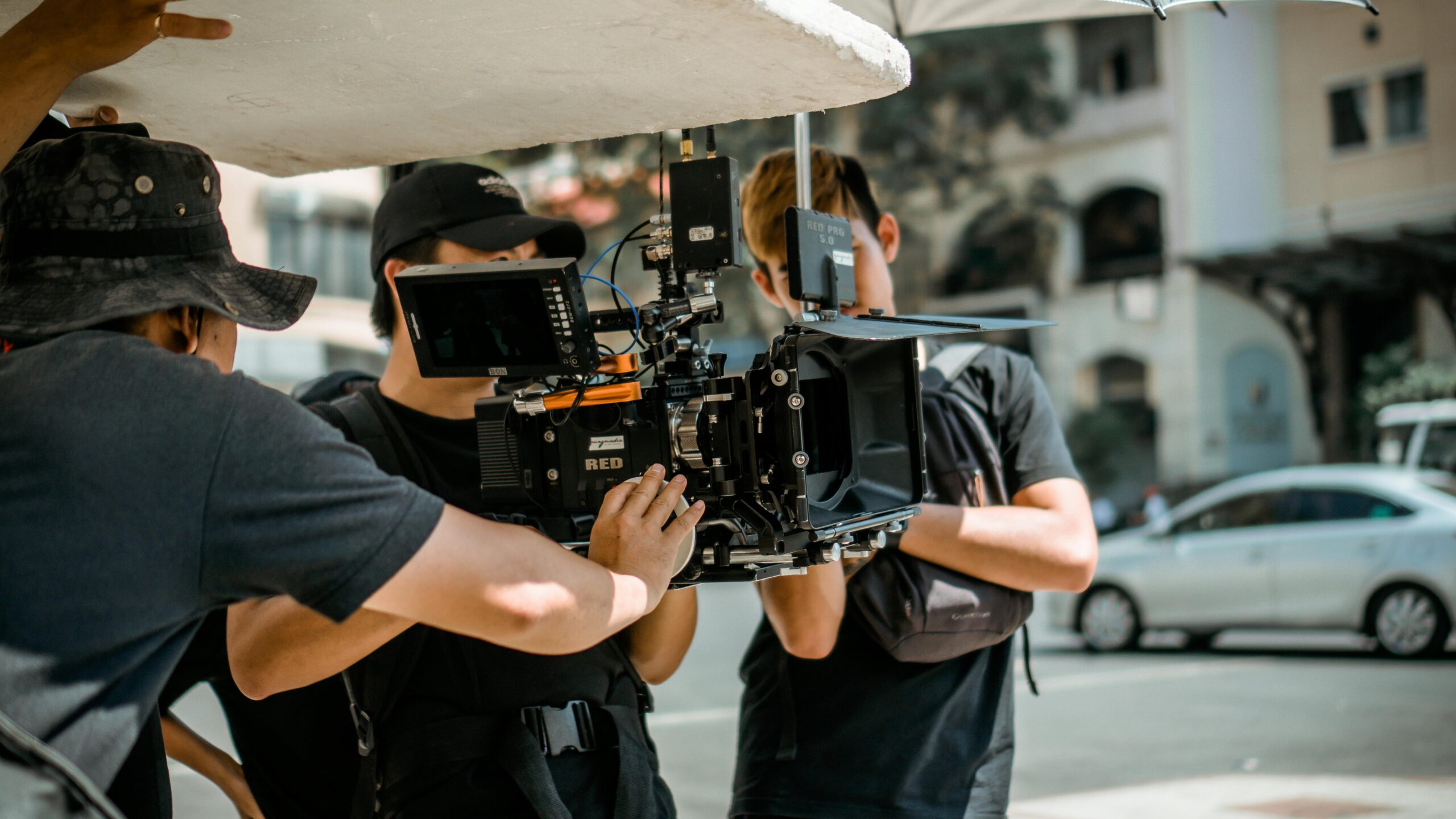
Director / Producer
They control the project and schedules. They also organize with the venue, schedule, and direct the creative process to suit your video objectives.
Camera Operators
Operators record every important moment in a good frame, concentration, and motion. They are aware of how to adjust rapidly to changes in lighting, movement of crowds, and rapid action.
Audio Technician
Good audio is essential. The technicians handle mixers, microphones, and ambient noise. These avoid problems of echo and make interviews and speeches clear.
Editors
Raw footage is converted into a final video by editors. They deal with color correction, transitions, branding, graphics, and sound design. They also choose the best moments.
-
Create a Shot List and Production Plan
An action plan keeps your crew in order. Be aware of what to shoot, who to shoot, and when important times will be.
Key Moments
Record all key events such as speeches, performances, product demonstrations, or visitor responses. This helps operators stay prepared.
B-Roll Plan
Take additional images of the location, crowd, cityscapes, signage, and decor. B-roll will give your final video some energy and visual style.
Timeline Coordination
Collaborate with event planners. Post your schedule to prevent surprises or schedule changes.
-
Equipment Checklist
Have essential gear ready.
- Cameras and lenses
- Tripods and stabilizers
- External microphones
- Audio recorders
- LED lights
- Backup batteries
- Memory cards
- Cables and adapters
- Portable chargers
- Weather covers
-
Preparing for San Francisco’s Unique Challenges
San Francisco is hilly, has microclimates, and erratic weather. Get ready before it is too late.
Weather Variability
Weather shifts quickly. Audio and visuals can be influenced by fog, wind, and sudden temperature drops. Always carry layers, wind jackets, and raincovers.
Traffic and Parking
There is heavy traffic in most places. Plan extra travel time and identify loading zones. Some neighborhoods require permits for vehicle access.
Crowd Control
Tourist areas get crowded. Choose filming times carefully, or assign a crew member to manage crowd interactions politely.
-
On-Site Filming Tips
Be open-minded and be a good communicator.
- Arrive early to set up.
- Test audio before the event starts.
- Capture establishing shots first.
- Record backup audio continuously.
- Stay alert for spontaneous moments.
- Keep extra batteries within reach.
-
Post-Production Workflow
Editing brings your story to life. Plan for fast, clean, and consistent post-production steps.
Organizing Footage
Sort clips by category, moment, and camera angle. This saves hours in editing and prevents missing important shots.
Editing and Color Work
Editors refine pacing, adjust exposure, match colors, and remove noise. They polish transitions and create smooth storytelling.
Graphics and Branding
Add logos, lower-thirds, animations, captions, and branded color themes. These will make your video on-brand and professional.
-
Budget Planning for an Event Video
Set a clear budget from the start.
- Venue fees
- Permit costs
- Gear rentals
- Crew rates
- Transportation
- Editing costs
- Drone fees
- Insurance
- Backup equipment
Bonus Tips for a Successful Event Video
Simple steps improve results.
- Get in touch with your team every day.
- Test the equipment the day before the event.
- Take more pictures than necessary.
- Be energetic, be organized.
- Always have a backup plan.
Why San Francisco is Great for Event Videos?
San Francisco has beautiful landscapes, contemporary event venues, and a rich artistic culture. You have classic scenery, distinct structures, and various areas to tell visual stories.
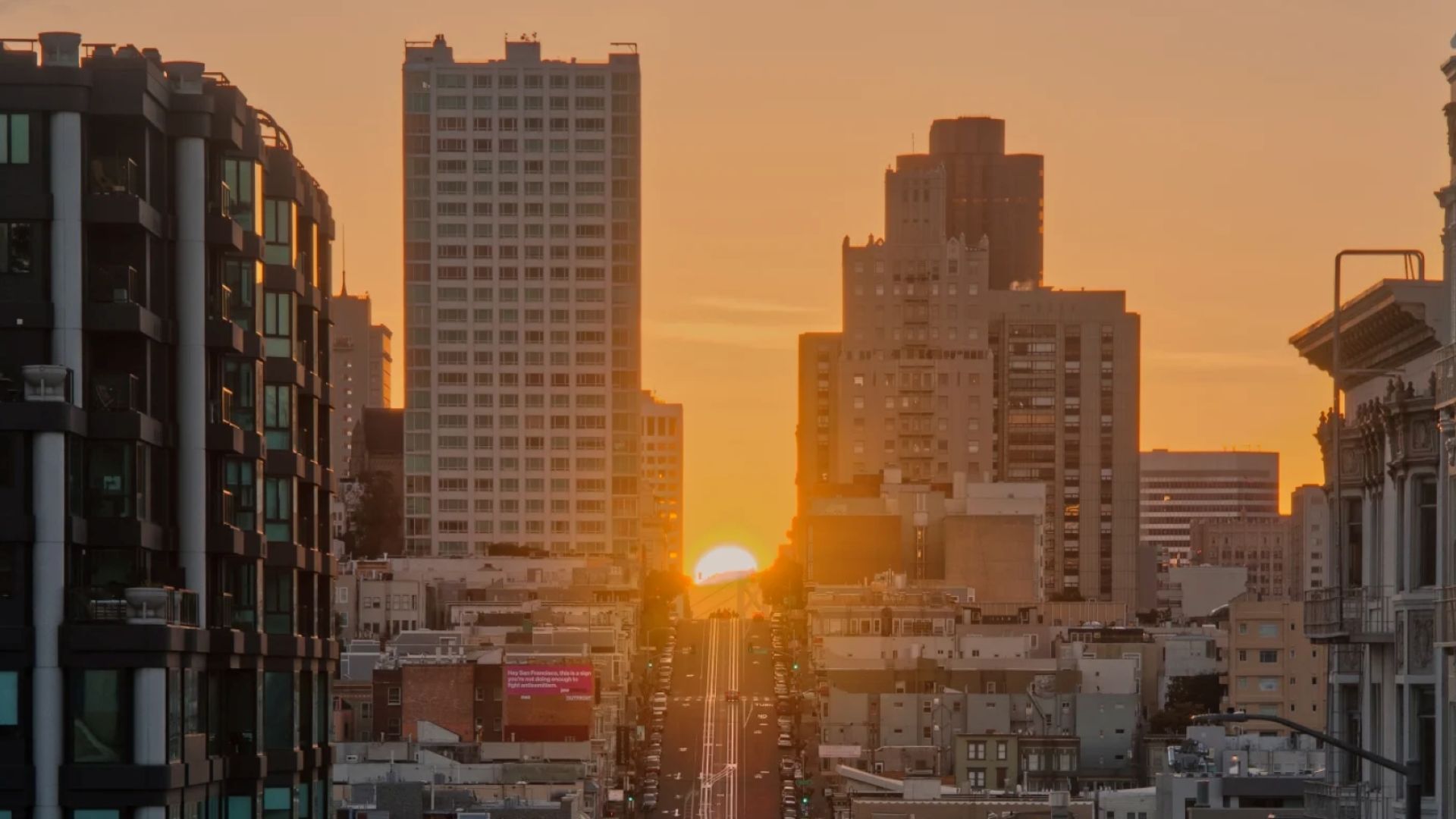
The city of technology promotes quality production. You can have urban, waterfront, or historic backdrops, and the choice is endless. It has one of the most memorable event videos in cities.
Conclusion
The process of creating an event video in San Francisco becomes easier when one has a clear plan. Choose the right venue. Secure permits. Build a strong team. Prepare for city challenges.
A well-planned and well-worked video will allow you to film confidently and create a refined video. Follow this guide and share your story of an event.
FAQs
How far in advance should I book a filming venue?
Book at least 4–8 weeks early. Popular venues may require even more time.
What is the best season for event filming in San Francisco?
Fall is ideal. The weather is clearer, and the fog is lighter.
How early should the crew arrive before the event starts?
Arrive 1–2 hours early for setup and testing.
Can I film nighttime events without extra permissions?
Some areas need extra approval. Noise and lighting rules may apply.
How long can I film in public spaces?
Duration depends on your permit. Most allow specific time blocks only.