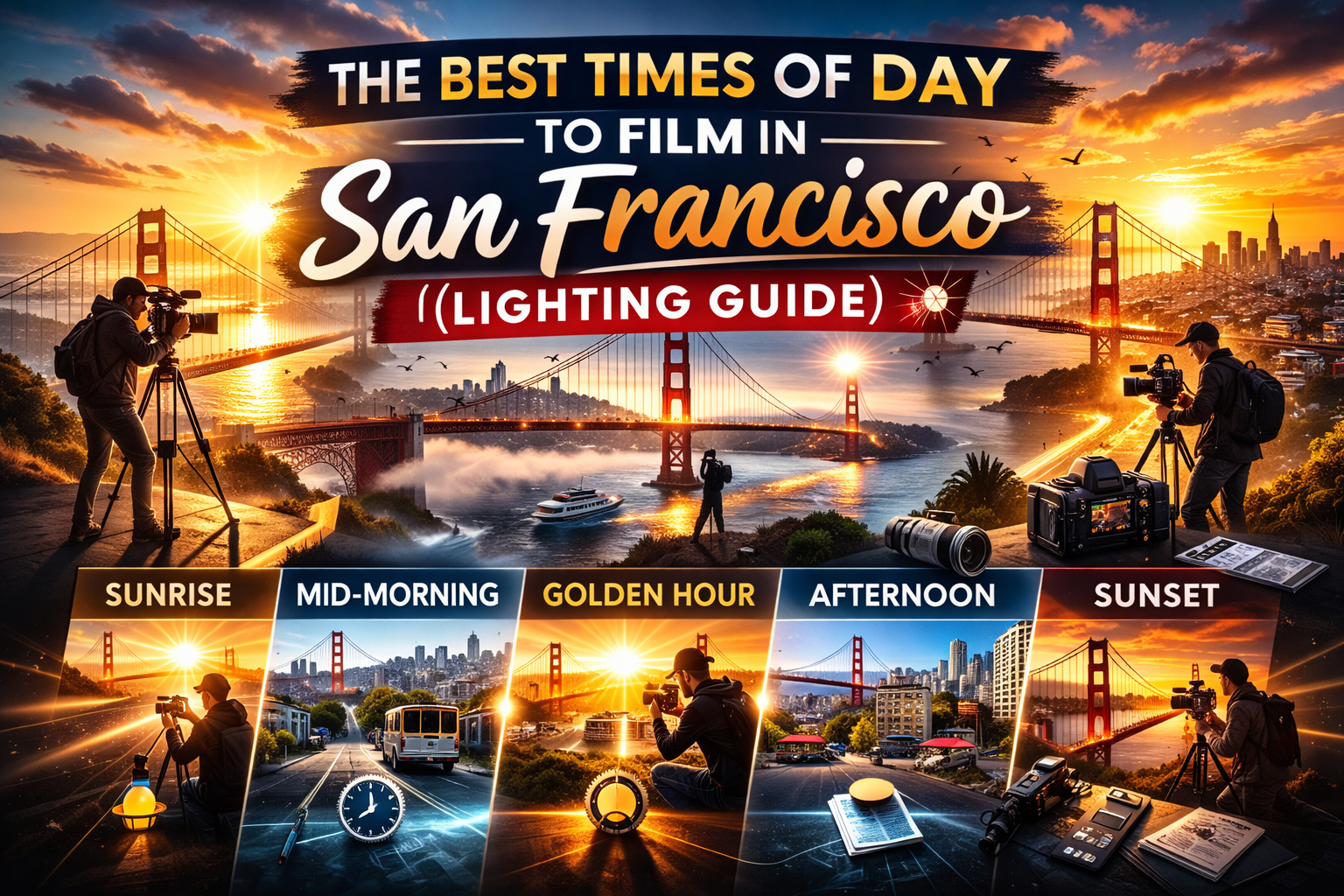
The Best Times of Day to Film in San Francisco (Lighting Guide)
Quick Summary
The shooting in San Francisco needs to be timely. Cinema light is provided by golden and blue hours. There are shots affected by fog, season, and location. Natural light planning will provide breathtaking, professional shots each time.
Introduction
It can be magic to shoot in San Francisco, but timing is everything. The unusual weather, its landmarks, and foggy mornings may make or break your shots.
It is important to know when the light is optimal so that your shots appear professional and cinematic.
This guide shows the best filming times, handling fog, and seasonal lighting changes. You’ll also explore top locations and get expert tips for stronger visuals.
Why Timing Matters for Filming?
The lighting defines each shot you make. Wrong timing may ruin a shot with harsh shadows or dull colors. San Francisco’s landmarks, streets, and hills react to sunlight in various ways.
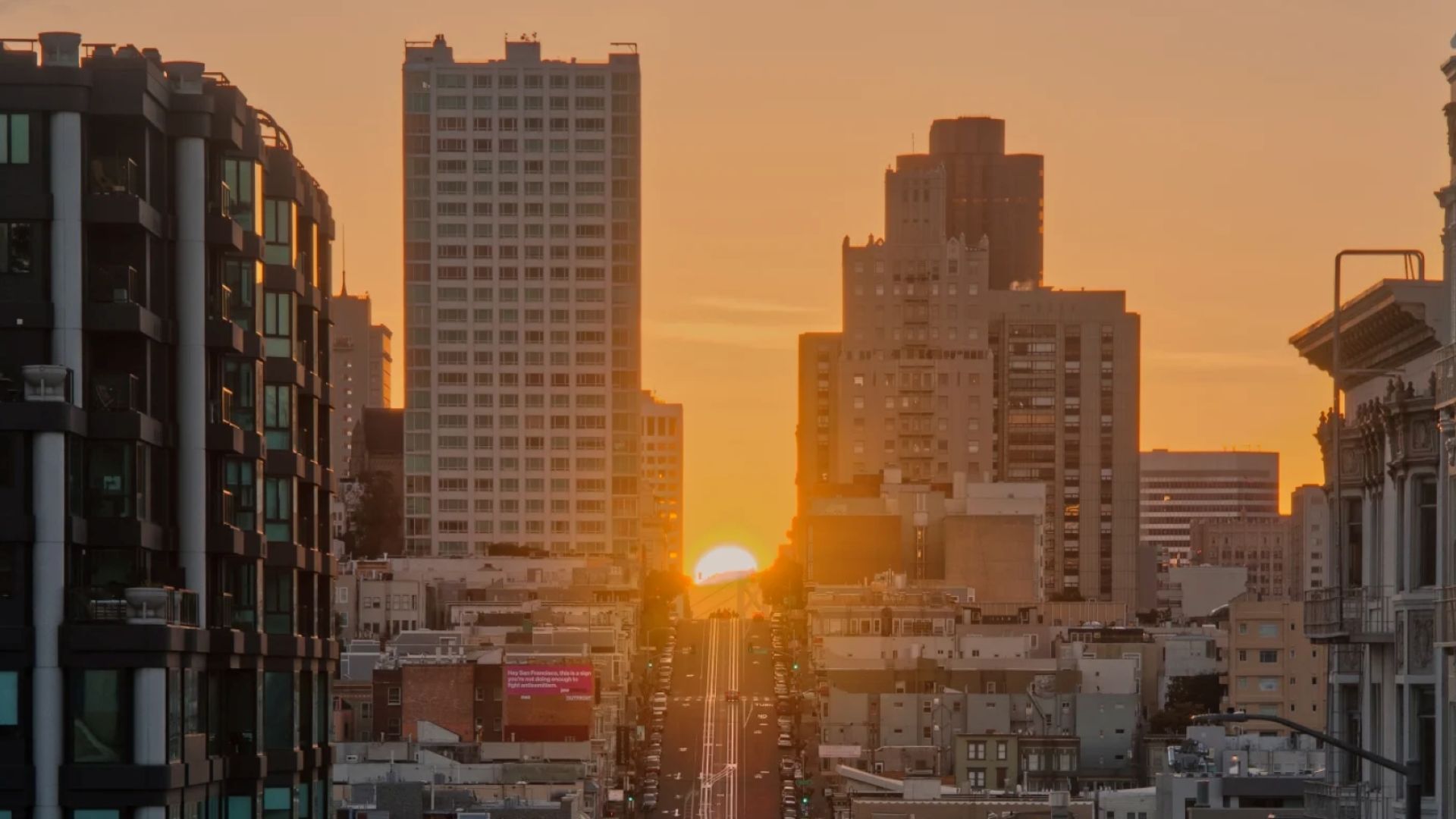
Choosing the best hour improves the clarity and beauty of your footage. Timing of the shooting improves depth, mood, and clarity.
Organizing your day around the natural light saves time, cash, and guarantees the wonderful shots each time.
The Golden Hour: Best Natural Lighting
The golden hour is the time right after sunrise and before sunset. Light is soft, warm, and diffused. It makes shots look cinematic. Perfect for cityscapes, portraits, and scenic outdoor views.
Morning Golden Hour
The golden hour in San Francisco typically begins at 6.30-7.30 AM (depending on the season). It is soft and warm light, ideal when shooting at the waterfront of Pier 39, the Marina, or Crissy Field.
Morning fog can also add a mystical touch to your footage, making it look dreamy.
Evening Golden Hour
The evening golden hour starts at about 5.30-6.30 PM. The sky is painted by the sunset, and it is colored with oranges, pinks, and purples. Such attractions as Twin Peaks and Baker Beach are beautiful.
Evening shots also reduce the number of crowds, so you have clean frames with no interruptions.
Tips for Golden Hour Filming
Come early to prepare your equipment.
- Scout a day in advance to get the best angles.
- Control shadows on faces with reflectors or diffusers.
- Shots should be short and focused because the golden hour is limited.
Blue Hour: Cool and Dramatic Scenes
Blue hour is right before sunrise and immediately after sunset. It is cooling in a bluish light upon the city. This would be ideal in dramatic, moody scenes, city skylines, and water reflections.
The natural glow of buildings and streetlights will create a cinematic experience without excessive post-editing.
Optimal time: 30 to 40 minutes before sunset or sunrise.
City streets and bridges should be shot with long exposures.
Blend with soft artificial lighting to make it cinematic.
Midday Filming: When to Use It
The midday light is intense, straight, and clear. It may be rough, but it is effective with some scenes, such as architectural shots or colorful outdoor events.
The most important thing in avoiding flat or overexposed footage is knowing how to handle it.
Tips for Midday Filming
Bounce boards or diffusers can be used to soften shadows.
- Select shady areas to prevent direct glaring.
- Tones can be embraced because contrasts can make the water or streets shine.
- Do not shoot portraits in the blazing daylight, because shadows are ugly.
Dealing with San Francisco Fog
San Francisco is known as a foggy city. It can add the dimension of cinema, but can also hide important details when not intended. It is crucial to learn how to shoot with fog.
Fog Timing
- Fog appears mostly in the morning, particularly from June to September.
- Afternoon fog is likely to be seen lifting, with clearer skies.
Filming Tips
- Use fog to create theatrical, airy images.
- Light the fog and form silhouettes with backlighting.
- Plan where the fog finds contact with features such as Golden Gate or Twin Peaks.
- Set white balance in-camera to preserve natural tones.
Seasonal Light Changes
The lighting also varies with the seasons in San Francisco. When planning around these shifts, consistency and mood are enhanced.
Summer
The days are longer, and the sun is closer. Fog frequently drifts along the shore. There is golden light in the early mornings when the fogs have not yet set in. The evening golden hour goes up to approximately 8 PM.
Winter
There are fewer sunny days because of the soft sunlight. It is cooler in the morning,s and there are longer shadows. Dark clouds soften contrasts, which is ideal in outdoor lighting.
Fall & Spring
Moderate sunlight, often mixed with morning fog. Golden hour is not as long as time, and thus it is important to plan accurately. It is not as bright in midday as it is in summer.
Best Locations and Timing
There are some of the well-known places in San Francisco that need proper timing to get the best shots.
-
Golden Gate Bridge
The light of the east is warm at Sunrise. Mornings give cleaner shots and more dramatic shots because of the less traffic and fewer crowds.
-
Alamo Square (Painted Ladies)
Midday or evening gives the colorful Victorian houses soft light. Do not expose to the bright midday sun to have unbalanced colors.
-
Twin Peaks
Sunset has views of the city with shining lights. The morning shoots provide a mystic, hazy look at the skyline.
-
Fisherman’s Wharf & Pier 39
Morning golden hour gives soft waterfront reflections. Late afternoon adds warmth to street and activity shots.
-
Palace of Fine Arts
The columns and lagoon are boosted by sunset light. Morning shoots attract peaceful reflections andfewers visitors.
Lighting Tips for San Francisco Filming
Proper lighting can make your video appear professional and filmic.
That’s why:
- Never forget to check the time of sunrise and sunset every season.
- Scout is a day before to know natural shadows.
- Add a reflector to emphasize faces or foreground.
- Record several shots because light situations can vary rapidly.
- Blend natural and artificial lighting.
Equipment Tips for Best Light
The right equipment will make your shots sharper and more professional in order to get the best light.
- Bring ND filters to regulate bright conditions exposure.
- Tripods provide stability for low-light or foggy shots.
- LED panels fill dark areas during early morning or evening.
- Wide lenses perform better in low light.
- Drones shoot city panoramas, keeping fog and lighting in mind.
Common Mistakes to Avoid
These are the mistakes that can be avoided to save time and make your footage look professional.
- Shooting after the golden hour and missing the peak.
- Breaking the rules of fog and finishing with vague shots.
- Excessively exposing midday shots without filters.
- Relying solely on post-production to fix natural lighting.
Bonus Tips for 2026 Filming in San Francisco
You can follow these advanced tips for your filming in San Francisco:
- Use apps to know the best times for sun, moon, and fog.
- Test creative reflections in windows and puddles.
- Add local weather prediction. Like, microclimates may shift light in an instant.
- Fly drones only when the wind is low.
- Bring portable gear to adjust quickly to light changes.
Conclusion
Film shooting in San Francisco is a combination of creativity and organization. The final footage depends on the golden and blue hours, fog, and seasonal changes in light.
Choosing the best time, understanding natural light, and having the right tools can improve your videos. Careful planning lets you capture cinematic shots that show the city’s beauty in a clear and vivid way.
FAQs
What are the best months for filming outdoors in SF?
Spring (April–June) and fall (September–October) have mild weather and less fog.
Can you film at night without a permit?
No, night filming in public areas usually requires a permit.
How long does it take to get a city filming permit?
It typically takes 1–3 weeks, depending on location and crew size.
Are there any sound restrictions in public areas?
Yes, loud noises may need approval. So, keep levels within local limits.
How early should crews arrive for sunrise shoots?
Arrive at least 30–45 minutes early to set up equipment and frame shots.